1 A first conversation
About where your day goes. If you've done the Where does your day go? self-audit, bring your score.
How it works
About twelve weeks, then a review 90 days later. The method runs in partnership with Symmetry Global, and every stage ends with something you keep.
Before the six stages
First, we agree it's a fit.
Nothing is set up and no tool is discussed until we've done these four things.
You keep
The Otium Agreement
Scope, dates, observation days and the ground rules, in writing.
About where your day goes. If you've done the Where does your day go? self-audit, bring your score.
This works for leaders who love their business, want to stay in the role and are ready to learn. If it isn't right for you, I'll say so.
Scope, dates and observation days, agreed in writing along with the ground rules.
A short check on six signals, so there's a clear before.
Stage 1
I watch. I don't fix anything yet.
At least one typical day alongside you, wherever it happens: the office, the car, the flight. If your week has two shapes, such as an office day and a travel day, we add a second.
You keep
The Day Map
One page, within a week: where the time went and where the noise got in. The Observation Log is yours too.
What you're doing, and for how long
Diary, message, call or interruption
Whether anyone else could have done it
Whether it gave you energy or took it
Each time your attention jumped
What got through despite the diary and your PA
Stage 2
Four piles. You make the call.
We sort everything on the Day Map into four piles, then score each item on time, money and choice. You make the final call on every item.
You keep
The Untangle Board
Every item with its pile and score, highest total first.
Would the business lose value if someone else did it?
We protect it, and make more room for it.
Could software, a report, a workflow or AI do it faster?
It goes into Build.
Could someone do it well with a clear handover?
A handover, finished in Pass it on.
Would anyone notice if it stopped?
We stop it, and tell whoever needs to know.
Each item gets 0, 1 or 2 for time, money and choice. Zero means no help, two means a lot. An item scoring zero on all three isn't worth changing.
The things only you can do, and love doing, get marked. They're what the whole plan exists to protect.
Stage 3
Your plan, on one page.
We turn the top of the Untangle Board into the Otium Plan, then set up the right technology around your real day. That might be AI, a better report or a simple workflow. Your hands are on the keyboard, not mine.
You keep
The Otium Plan
Agreed by you, with the tools working on your own devices.
One change at a time, highest score first. No more than three bedding in at once.
One page
Which of the three does it give back?
If it adds one, it needs a strong reason.
You and your team, without me.
Your company's IT or data owner signs it off.
Stage 4
Until it's yours.
You use the set-up in real work, with me alongside, until you can run it and set up the next thing without me. Practise ends when you pass the practitioner check, not on a date.
You keep
The skills
The practitioner check passed, your second baseline taken, and your Practice Log.
Sessions happen inside your real day, not in a training room. Between sessions you keep a short Practice Log of what worked and what got in the way.
I'm an enabler. I won't do it for you.
Work done for you stops when the consultant leaves. Skills you own keep growing.
Stage 5
Hours back mean little without a reason.
Technology can win back the hours. It can't tell you what you want them for. That's where Paul Stephenson comes in.
You keep
The Purpose Statement
A few lines in your own words. The idea you keep putting aside. Dinner at home, fully present.
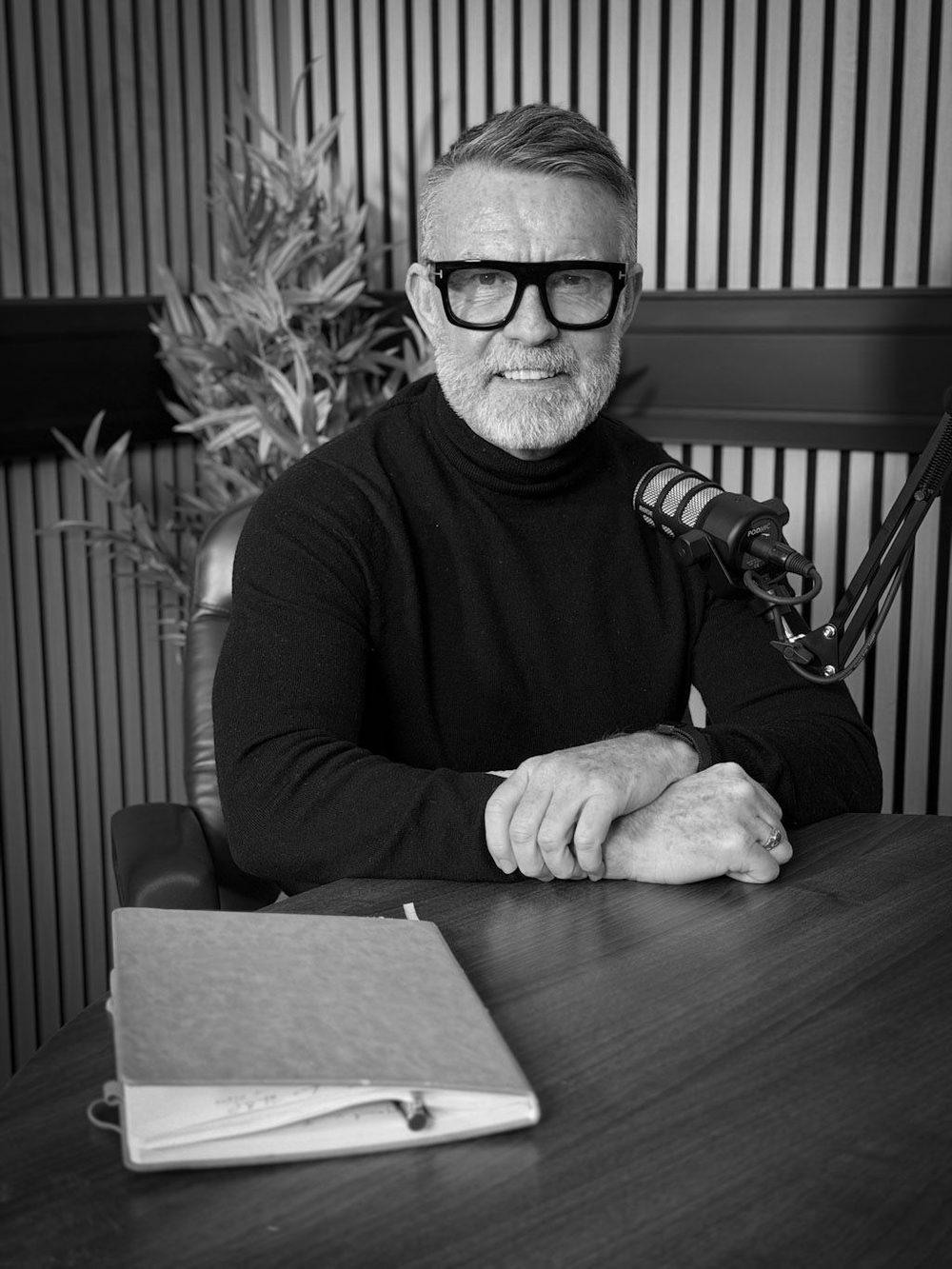
Executive Guide, Symmetry Global
Paul Stephenson looks after the person behind the role. His approach is holistic: he works with the whole person, which is how changes last and how the work starts to mean something again. His work runs alongside the whole programme, and stage 5 is where it comes to the front.
The Otium Method runs in partnership with Symmetry Global, a growth ecosystem for founders, executives and leaders. Visit symmetryglobal.love
I've been through his process myself. It reshaped my business and what I spend my time on. That's why he's part of this.
After Observe, your Day Map and baseline go to Paul Stephenson, with your permission.
At the end of stage 5, your Purpose Statement goes into the Otium Plan.
What you tell Paul Stephenson stays between the two of you, unless you choose to share it.
Stage 6
One leader at a time.
You show the people around you what's changed, so your team has permission to follow.
You keep
The Ripple Plan
What's been said, what's been handed over and who goes next.
For example: I've stopped replying after seven. If it's urgent, here's how to reach me.
Everything in the Team pile moves to its new owner.
Show one new tool or report openly, in a team meeting.
One or two people who'd benefit, inside the business or outside it.
Your time back, and a clear answer to what it's for.
When the midnight messages stop, they stop feeling they have to answer.
The team gets its evenings back too, and the people at home feel it.
This is also how new technology, AI included, spreads best. A leader who uses it well, in plain sight, gives everyone else permission to try.
After the six stages
We measure it three times.
Hours saved is the first measure, and the least important one. We check six signals at the start, at the end of Practise and 90 days later.
You keep
Your before and after
Six signals, measured three times. Everything else stays with you too.
Hours back each week, and a clear answer to where they went.
A clear diary and a clear head. Fewer messages finding their way through.
Switching off by choice, and being fully present at home.
Something started that had been put off for years.
Setting up the next tool, report or AI use without help.
People around you starting to work differently.
We compare the three readings, adjust the plan and decide whether anything else is needed.
With your permission, I write up your before and after, named or anonymous.
My promise
Every piece of work passes all eight. One no, and it doesn't go out.
Does it add weight to a few decisions, or just help you do more?
Is it based on what I saw, not a tool I like?
Did I see it, or am I assuming it?
Can you run it without me?
Do we know what this time is for?
Does it work for your health, family and energy, not just the diary?
Does it help you enjoy the role?
Which of time, money or choice does it give back, and does it add noise?
Before we meet
Three questions to sit with. Bring your answers to our first conversation.
1 If you had five hours back every week, what would you do with them?
2 What's the idea you keep putting aside?
3 When did you last spend an evening fully present?